
Reconstructive & Burn Surgery
Pressure (Bed) Sore
“Bedsores don’t appear overnight — but they’ll surely keep you up at night if ignored.”
What is Bed Sore?
A bed sore, also called a pressure ulcer or pressure sore, is an area of skin and underlying tissue that becomes damaged due to prolonged pressure. This usually happens over bony areas such as the heels, hips, elbows, and lower back, especially in patients who are bedridden or immobile for long periods.
The constant pressure reduces blood flow to the skin, causing the tissue to weaken and eventually break down, leading to an open wound.
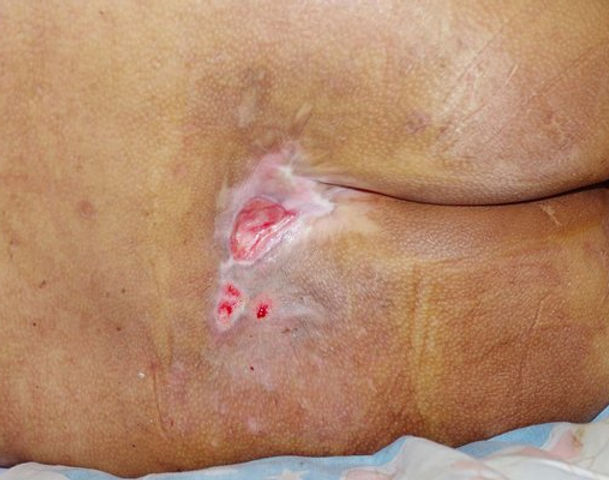
Why Do Pressure Sores Develop?
Pressure sores develop due to:
-
constant pressure cutting off blood supply.
-
prolonged immobility.
-
poor nutrition or dehydration.
-
moisture from sweat or incontinence.
-
reduced sensation (e.g., spinal cord injury, stroke).
They are not usually considered a sign of neglect, but early prevention is critical.
Stages of Bed Sores (Pressure Ulcers)
Stage I – Redness (Non-blanchable):
The skin is intact but appears red and does not turn white when pressed. It may feel warm, firm, or tender. This is an early warning sign.
Stage II – Partial Skin Loss:
The outer layer of skin (epidermis) and part of the deeper layer (dermis) are damaged. The sore may look like a blister or shallow open wound with a pink or red base.
Stage III – Full-Thickness Skin Loss:
The wound extends through the full thickness of the skin into the subcutaneous fat layer. The ulcer looks like a deep crater, but bone, tendon, or muscle are not yet visible.
Stage IV – Deep Tissue Damage:
There is full-thickness tissue loss with exposed bone, tendon, or muscle. The wound may have dead tissue (eschar), slough, or tunneling beneath the skin.
Unstageable:
The wound base is covered by thick dead tissue (slough or eschar), so the depth and true stage cannot be determined until it’s cleaned.
When to Seek Specialist Care
Consult a specialist if:
-
a wound is not healing.
-
there is foul discharge or fever.
-
bone or muscle is visible.
-
repeated breakdown occurs.
Treatment Plan
Stage I – Redness (Non-blanchable)
-
Relieve pressure by changing position frequently.
-
Use pressure-relieving cushions or mattresses.
-
Keep skin clean, dry, and moisturized.
-
Improve nutrition and hydration.
-
Monitor closely for signs of progression.
Stage II – Partial Skin Loss
-
Continue all Stage I measures.
-
Clean the area with mild saline or antiseptic solution.
-
Apply moist wound-healing dressings (e.g. hydrocolloid).
-
Avoid harsh disinfectants or rubbing.
-
Treat any infection early if redness or discharge increases.
Stage III – Full-Thickness Skin Loss
-
Debride (remove) necrotic tissue – surgically, mechanically, enzymatically, or with dressings.
-
Use foam or alginate dressings to maintain a moist environment.
-
Consider negative-pressure (vacuum-assisted) wound therapy.
-
Give antibiotics if there’s infection.
-
Optimize nutrition (high protein, vitamin C, zinc).
Stage IV – Deep Tissue Damage
-
Aggressive debridement of dead tissue.
-
Broad-spectrum antibiotics if infected or osteomyelitis suspected.
-
Advanced dressings or negative-pressure wound therapy.
-
Reconstructive surgery (e.g. flap coverage) often required for large or deep ulcers.
-
Intensive nutritional and supportive care.
Unstageable
-
Remove eschar or slough (unless on heel and dry/stable).
-
Once cleaned, treat according to the appropriate stage.
Recovery and Prevention
After treatment:
-
strict pressure relief is essential.
-
proper wound care and nutrition.
-
caregiver education.
-
regular follow-up.
Prevention is always better than treatment.

Book Consultation — Pressure Sore Treatment in Pakistan
Dr. Saud Majid, Plastic & Reconstructive Surgeon, offers comprehensive management of pressure sores, including advanced wound care and reconstructive flap surgery, with a focus on long-term healing and prevention of recurrence.
Consultation includes:
-
wound assessment and staging.
-
treatment planning.
-
surgical evaluation if required.
-
caregiver guidance for prevention.