
Body Contouring
Surgery
Gynecomastia
“Turn ‘man boobs’ into manly moves.”
What is Gynecomastia?
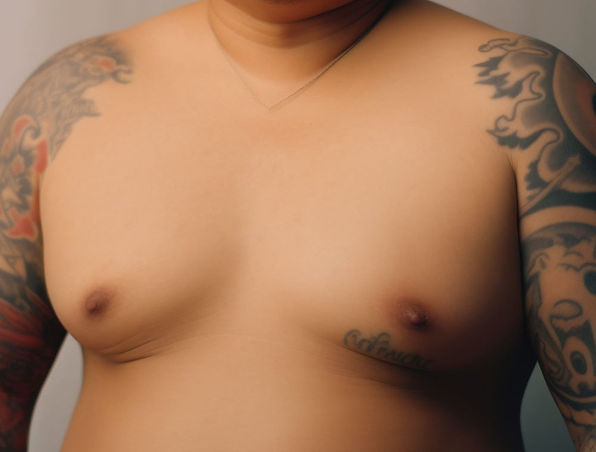
Gynecomastia correction, or male chest reduction surgery, is a procedure that helps men who feel self-conscious about having enlarged breasts. This condition, called gynecomastia (or "Man-Boobs"), is actually quite common and can affect men of all ages. It may be caused by hormonal changes, genetics, certain medications, or weight gain — but in most cases, it’s not something you can fix through exercise alone.
The surgery is designed to create a flatter, firmer, and more masculine-looking chest. During the procedure, excess fat and glandular tissue are removed through small incisions. In some cases, liposuction is enough, while in others a combination of liposuction and direct tissue removal gives the best result. If there’s loose skin, it can also be tightened for a smoother contour.
Beyond the physical change, many men notice a big improvement in their confidence. Wearing fitted shirts, going to the gym, or even enjoying the beach becomes easier and more comfortable. This procedure isn’t just about changing how the chest looks — it’s about helping you feel at ease in your own body again.
Who is a Good Candidate for Gynecomastia Surgery?
You may benefit from surgery if you have:
-
enlarged male breasts.
-
firm glandular tissue under nipples.
-
puffy or enlarged nipples.
-
chest fullness not improving with diet or exercise.
-
asymmetry between both sides.
-
emotional or social discomfort.
Ideal candidates are in good general health and have stable body weight.
Grades of Gynecomastia
While variations exist, the most common system describes four main grades:
-
Grade 1 (Minor): Small, localized puffiness or button of glandular tissue concentrated around the areola (nipple/dark circle). No significant skin excess or sagging (ptosis).
-
Grade 2 (Moderate): Enlargement extends beyond the areola, but edges blend into the chest. Can be split into:
-
Grade 3 (Severe): Marked enlargement with noticeable skin sagging and redundancy, often resembling a pendulous breast.
-
Grade 4 (Marked/Feminization): Very severe enlargement with significant skin redundancy and a fully feminized appearance, with the nipple-areola complex pointing downward.
Gynecomastia Surgery vs Exercise
While weight loss and exercise may reduce fat, true glandular gynecomastia does not resolve without surgery. Surgery is the only effective treatment for firm gland tissue.
How Gynecomastia Surgery is Performed
Depending on tissue type and severity, surgery may involve:
-
liposuction to remove excess fat.
-
sub-areolar U-shaped excision to remove firm glandular tissue.
-
skin tightening or removal in advanced cases.
Procedure details:
-
performed under local or general anesthesia.
-
incisions are small and discreet.
-
surgery duration: 1.5–3 hours.
-
usually day-care surgery.
Recovery After Gynecomastia Surgery
After surgery, you may experience:
-
swelling and bruising.
-
mild pain or tightness.
-
temporary numbness.
Recovery timeline:
-
compression garment: 4–6 weeks.
-
return to desk work: 5–7 days.
-
exercise: 3–4 weeks.
-
final chest contour: 3–6 months.
Complications
Gynecomastia correction is generally a very safe and satisfying procedure when performed by an experienced surgeon. However, like any surgery, there are some possible risks to be aware of.
In the first few days, it’s normal to experience some swelling, bruising, or mild discomfort, which usually settles within a week or two. Temporary numbness or sensitivity in the chest area can also occur as the nerves heal.
Less commonly, small amounts of fluid or blood may collect under the skin (called a seroma or hematoma), which can be easily drained if needed. Irregular contouring or slight asymmetry between the two sides may occur in some cases but can often improve with time as swelling goes down.
Very rarely, complications such as infection, delayed wound healing, or noticeable scarring may happen. These risks are minimized by following post-operative care instructions closely and attending follow-up appointments.
Overall, most men recover smoothly and are very pleased with the outcome — a flatter, more confident chest that feels natural and comfortable.
Book Consultation — Gynecomastia Surgery in Pakistan
Dr. Saud Majid is a plastic and cosmetic surgeon practicing since 2020, providing male breast reduction surgery with a focus on masculine chest contouring, safety, and natural results.
For confidential consultation and personalized treatment planning:
Consultation includes:
-
chest examination and grading
-
discussion of surgical technique
-
recovery timeline and garment guidance
-
realistic outcome counseling