
Facial Aesthetics
Hair Transplant
“It’s not just hair restoration — it’s confidence under reconstruction.”
What is Hair Transplantation?
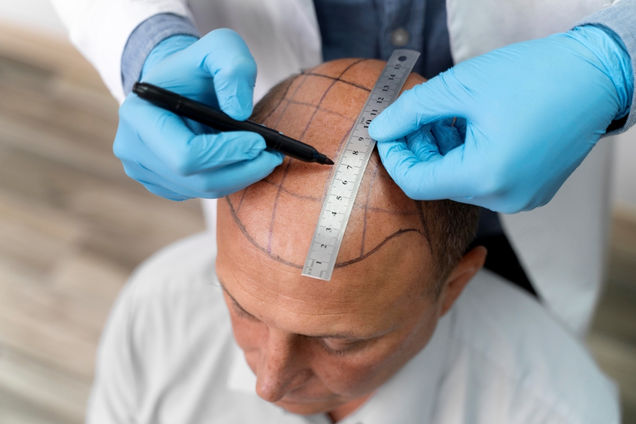
Hair transplantation is a refined and precise surgical procedure designed to restore hair in areas affected by thinning or baldness. It works by redistributing your own healthy hair follicles from regions of stable growth (usually the back or sides of the scalp) to areas where hair has thinned or been lost. Since the transplanted follicles retain their natural growth characteristics, the results are long-lasting and completely natural in appearance.
Types of Hair Transplantation
Hair transplantation has evolved into a sophisticated art and science. The choice of technique depends on your pattern of hair loss, donor area, and desired density.
1. FUT (Follicular Unit Transplantation) – “Strip Method”
In FUT, a thin strip of scalp is removed from the donor region (usually the back of the head). The area is then closed carefully, leaving a fine linear scar that can be hidden under surrounding hair. The strip is dissected under magnification into tiny grafts (each containing 1–4 follicles), which are then implanted into the bald areas.
Advantages:
-
Allows harvesting of a large number of grafts in a single session.
-
Excellent option for advanced baldness.
Considerations:
-
Slightly longer healing time.
-
Small linear scar (though usually inconspicuous).
2. FUE (Follicular Unit Extraction) – “No-Strip Method”
In FUE, individual follicular units are extracted directly from the donor area using a micro-punch device. Tiny circular incisions are made, which heal quickly without visible linear scarring.
Advantages:
-
Minimally invasive with quicker recovery.
-
No visible linear scar.
-
Ideal for those who prefer short hairstyles.
Considerations:
-
Requires more time and precision.
-
Slightly higher cost per graft.
3. DHI (Direct Hair Implantation)
A refined version of FUE, DHI uses a specialized implanter pen that allows extraction and implantation in one continuous process, minimizing the time follicles spend outside the body.
Advantages:
-
Greater graft survival rate.
-
Precise control of angle, depth, and direction.
-
Minimal trauma to the scalp.
4. Robotic or Automated Hair Transplantation
Modern clinics may use robotic systems (such as ARTAS) to assist in follicle extraction and placement, enhancing speed and precision while reducing human fatigue.
Advantages:
-
Consistent results with high accuracy.
-
Reduced human error.
Considerations:
-
Availability and cost may vary.
5. Body Hair Transplantation
When scalp donor hair is insufficient, follicles can be harvested from other body areas — such as the beard, chest, or back — to restore density or reconstruct hairlines.
Advantages:
-
Expands donor supply.
-
Useful for corrective or secondary transplants.
Considerations:
-
Body hair may differ in texture and growth rate.
6. Non-Surgical or Adjunctive Therapies
While not transplants themselves, these are often used alongside or before transplantation to improve outcomes:
-
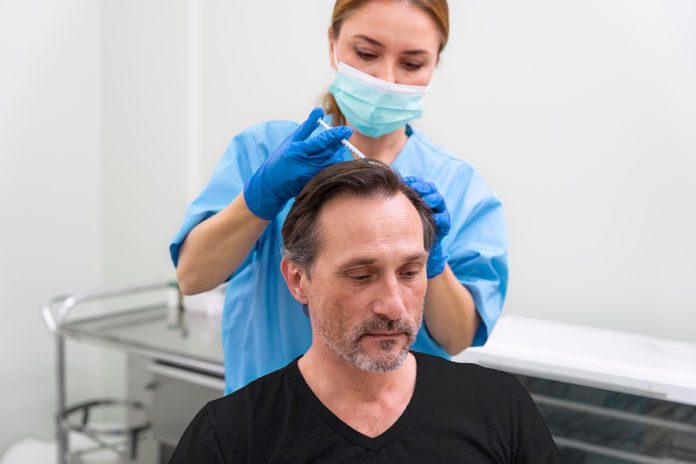
PRP (Platelet-Rich Plasma) Therapy: Stimulates hair growth and strengthens transplanted follicles.
-
Stem Cell or Exosome-Based Treatments: Emerging options to boost follicle survival and scalp vitality.
Who are the Ideal Candidates?
Hair transplantation is suitable for:
-
Men and women experiencing pattern baldness.
-
Those with receding hairlines or thinning crowns.
-
Individuals with hair loss due to injury or previous surgery.
-
Patients with stable donor hair at the back or sides of the scalp.
Recovery and Results
Modern hair transplantation is designed for comfort, safety, and minimal downtime. Most patients are pleasantly surprised by how quickly they can return to their regular routines after the procedure.
Immediate Recovery
After the surgery, a light dressing is applied to protect the grafted area for the first 24–48 hours. Mild swelling, redness, or tightness around the forehead and donor site can occur, usually resolving within a few days. Any discomfort is mild and easily managed with prescribed medication.
Patients can generally resume light activities the very next day, and return to work within 3–5 days, depending on the technique used (FUE, FUT, or DHI).
Post-Procedure Care
You’ll be advised on how to gently wash your scalp, avoid direct sunlight, and prevent friction or trauma to the grafts. The transplanted follicles enter a temporary resting phase before beginning new growth.
Following your surgeon’s care plan ensures the best possible graft survival and natural results.
Hair Growth Timeline
-
2–3 Weeks: The transplanted hairs may shed — this is a normal part of the process called “shock loss.”
-
3–4 Months: New hair starts to grow from the transplanted follicles.
-
6 Months: Noticeable improvement in density and texture.
-
9–12 Months: Full, natural results become visible — with permanent hair growth that continues to thicken over time.
Each follicle grows naturally, allowing the hair to be cut, styled, and maintained just like the rest of your hair.
Results You Can Expect
A successful hair transplant restores a natural hairline, improved density, and long-lasting results. Because the transplanted follicles are genetically resistant to hair loss, they continue to grow permanently. The outcome is not just a fuller head of hair — it’s a renewed sense of confidence, youth, and self-assurance.
Complications
Hair transplantation is generally a safe and low-risk procedure, but like any surgery, minor temporary effects can occur.
-
Swelling & Redness: Common for a few days after surgery; settles quickly.
-
Mild Pain or Discomfort: Easily managed with medication.
-
Bleeding or Scabbing: Small scabs may form and fall off naturally within a week.
-
Infection (Rare): Prevented with proper hygiene and antibiotics if needed.
-
Folliculitis: Small bumps as new hairs grow; easily treated.
-
Shock Loss: Temporary shedding before new growth begins.
-
Uneven Growth: Early patchiness evens out within months.
-
Scarring: Minimal — linear in FUT, tiny dots in FUE.
-
Numbness: Temporary and self-resolving.
Book Consultation — Hair Transplant in Pakistan
Dr. Saud Majid is a plastic and cosmetic surgeon practicing since 2020, providing hair transplant procedures with a focus on natural hairline design, graft survival, and patient safety.
For personalized assessment and treatment planning:
Consultation includes:
-
scalp and donor area evaluation
-
hairline design discussion
-
technique selection (FUE / FUT / DHI)
-
recovery expectations and realistic outcomes