
Hand Surgery
Hand Syndactyly
“Sometimes nature forgets to separate — that’s where a skilled hand lends a helping one.”
What is Syndactyly?
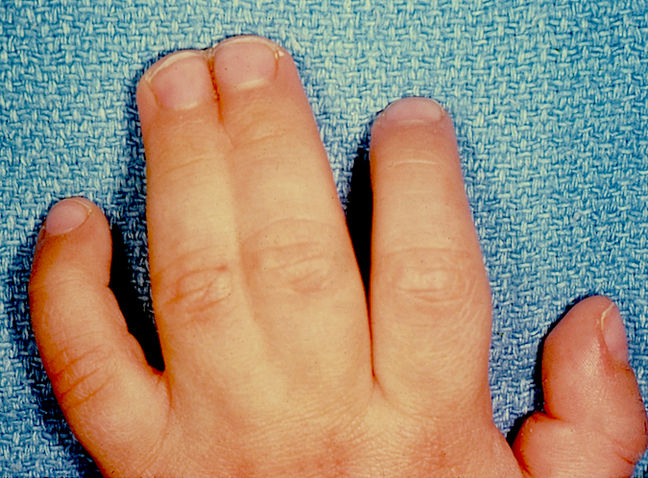
Syndactyly is a congenital (present at birth) condition where two or more fingers are fused together, either by skin, soft tissue, or, in some cases, bone. It occurs when the fingers fail to completely separate during early fetal development.
It is one of the most common congenital hand differences, and it can affect one or both hands. The degree of fusion varies — from simple cases involving only skin connection to complex forms where bones, tendons, or joints are joined.
Although syndactyly does not usually cause pain, it can limit finger movement, hand function, and appearance. Modern surgical techniques allow precise separation and reconstruction, giving each finger independent motion, natural contour, and normal growth potential.
Types of Hand Syndactyly
Syndactyly is classified based on the structures involved and the extent of fusion between the fingers. Understanding the type helps guide timing and technique of surgical correction for the best functional and cosmetic outcome.
1. Simple Syndactyly
-
Description: Fingers are joined only by skin and soft tissue, with separate bones and joints.
-
Common Sites: Between the middle and ring fingers.
-
Treatment: Surgical separation with skin grafting; excellent results are expected.
2. Complex Syndactyly
-
Description: Fusion involves bones, tendons, joints, or nails in addition to skin.
-
Features: May cause stiffness or deformity if not corrected early.
-
Treatment: More intricate surgery is required, often with staged reconstruction.
3. Complete Syndactyly
-
Description: Fingers are fused along their entire length, up to the fingertips.
-
Treatment: Full-length surgical release; meticulous planning needed to reconstruct web spaces and nail folds.
4. Incomplete Syndactyly
-
Description: Fusion extends only partway up the fingers, usually at the base or middle.
-
Treatment: Surgical separation is simpler and has a faster recovery.
5. Complicated Syndactyly
-
Description: Occurs with abnormal bones, extra digits (polydactyly), or part of a syndromic condition (like Apert or Poland syndrome).
-
Treatment: Requires customized surgical planning and multidisciplinary care.
Causes of Syndactyly
-
abnormal separation of fingers during fetal development.
-
genetic factors (sometimes inherited).
-
association with certain congenital syndromes.
Most cases are present at birth.
Surgical Correction and Timing of Syndactyly
The goal of syndactyly surgery is to separate fused fingers while creating natural-looking, functional web spaces that allow independent finger movement, normal growth, and a pleasing appearance.
1. Timing of Surgery
-
Ideal Age: Usually performed between 12 and 18 months of age, when the hand is large enough for delicate dissection but before growth deformities develop.
-
Early Surgery: Recommended if the fusion involves the border digits (thumb–index or ring–little finger), as uneven growth can cause finger deviation or joint stiffness.
-
Staged Approach: In complex or bilateral cases, separation may be done in stages to allow safer healing and better functional outcomes.
2. Surgical Technique
-
Incision Design: Zigzag or interdigitating incisions are planned to prevent scar contracture and to recreate natural finger web contours.
-
Tissue Coverage: After separation, the raw areas are covered with skin grafts (usually from the groin or inner arm) to ensure proper healing.
-
Special Attention: Nail folds, tendons, and neurovascular bundles are meticulously preserved for normal growth and sensation.
3. Postoperative Care & Recovery
-
The hand is protected in a soft dressing or splint for a few weeks.
-
Hospital stay is usually short (overnight).
-
Splinting may be required initially to prevent contractures.
-
Stitches removed in 7–10 days, depending on wound condition.
-
Physiotherapy helps maintain flexibility and prevent stiffness.
-
Regular follow-up ensures that the web spaces heal properly and that growth remains symmetrical.
-
Gradual improvement in movement over weeks will be seen.
Complications of Syndactyly Surgery
Syndactyly correction is generally safe and successful, but a few complications may occur:
-
Web Creep: The web space may move slightly forward over time due to scarring.
-
Skin Graft Problems: Graft loss or color mismatch may occur but is usually minor.
-
Finger Deviation or Stiffness: Rare, especially in complex cases; improved with therapy.
-
Sensation Changes: Temporary numbness or tingling that typically resolves.
-
Nail Irregularities: Occasionally seen when the nails are involved in the fusion.
Book Consultation — Syndactyly Treatment in Pakistan
Dr. Saud Majid is a plastic and cosmetic surgeon practicing since 2020, providing specialized surgical correction of congenital hand anomalies such as syndactyly, with focus on safe separation, functional restoration, and long-term outcomes.
For expert evaluation and surgical planning:
Consultation includes:
-
detailed assessment of hand anatomy.
-
discussion of surgical timing and technique.
-
explanation of recovery and outcomes.
-
parental counseling and follow-up planning.