
Hand Surgery
Polydactyly
“More isn’t always better — except when it comes to the care that perfects every hand.”
What is Polydactyly?
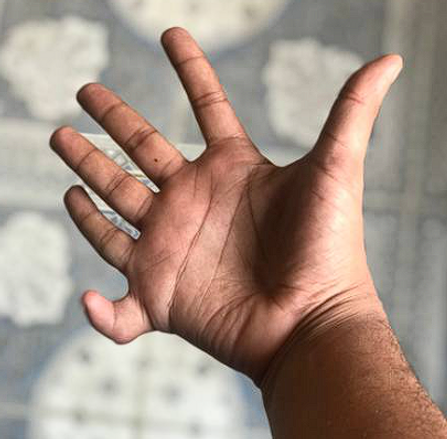
Polydactyly is a congenital condition in which a person is born with extra fingers or toes — meaning more than the usual five digits on each hand or foot.
It usually occurs due to genetic mutations or familial inheritance, though it can sometimes appear as part of a syndrome or chromosomal abnormality. It is among the most common congenital limb anomalies and may affect hand function, appearance, and normal development, depending on the type and complexity.

Types of Polydactyly
1. Preaxial Polydactyly:
-
The extra digit appears on the thumb or big toe side.
-
Commonly seen as an extra thumb.
2. Postaxial Polydactyly:
-
The extra digit appears on the little finger or little toe side.
-
Often seen as a small nub or fully formed extra little finger.
3. Central Polydactyly:
-
The extra digit arises in the middle of the hand or foot (between the normal digits).
-
Rarest form.
Causes and Associations
Polydactyly occurs due to:
-
abnormal limb development during early pregnancy.
-
genetic factors (sometimes inherited).
It may occur alone or as part of a genetic syndrome, especially when complex.
Diagnosis
Diagnosis involves:
-
clinical examination at birth.
-
X-rays to assess bone involvement.
-
evaluation for associated anomalies in selected cases.
Early diagnosis helps guide treatment planning.
Treatment of Polydactyly
The mainstay of treatment is surgical correction, tailored to the type and complexity of the extra digit.
1. Timing
-
Usually performed between 6 months to 1 year of age, once the hand is large enough for precise surgery and before fine motor skills develop.
-
In adults, surgery can be done anytime if the extra digit causes functional or cosmetic concerns.
2. Surgical Options
-
Simple ligation: For small, soft-tissue nubbins (common in postaxial type). The blood supply is tied off, and the extra digit shrivels and falls off.
-
Excision & Reconstruction: For well-formed extra digits with bone, tendons, or joints.
-
The extra digit is carefully removed.
-
Surrounding structures (ligaments, tendons, nerves) are repaired or repositioned to maintain stability and appearance.
-
3. Postoperative Care
-
Short period of splinting or dressing to protect the repair.
-
Physiotherapy may be needed to maintain range of motion and fine motor function.
Recovery After Polydactyly Surgery
-
short hospital stay in most cases.
-
mild swelling initially.
-
stitches removed in 10–14 days.
-
normal use gradually resumes.
-
hand or foot therapy advised if needed.
Complications of Polydactyly Surgery
-
Minor deformity or finger deviation
-
Joint stiffness or instability
-
Visible scar or tender neuroma
-
Rare regrowth if incompletely removed
-
Infection or delayed healing (uncommon)
Book Consultation — Polydactyly Treatment in Pakistan
Dr. Saud Majid is a plastic and cosmetic surgeon practicing since 2020, providing specialized surgical correction of congenital hand and foot anomalies such as polydactyly, with focus on functional restoration, safe surgery, and long-term outcomes.
For expert evaluation and surgical planning:
Consultation includes:
-
detailed limb assessment.
-
imaging review if required.
-
discussion of surgical timing and technique.
-
parental counseling and follow-up planning.